Brandon Anderson
ML/AI leader building high‑stakes decision systems at the national scale.
PhD Physics · IRS Technical Advisor · Open Source
About
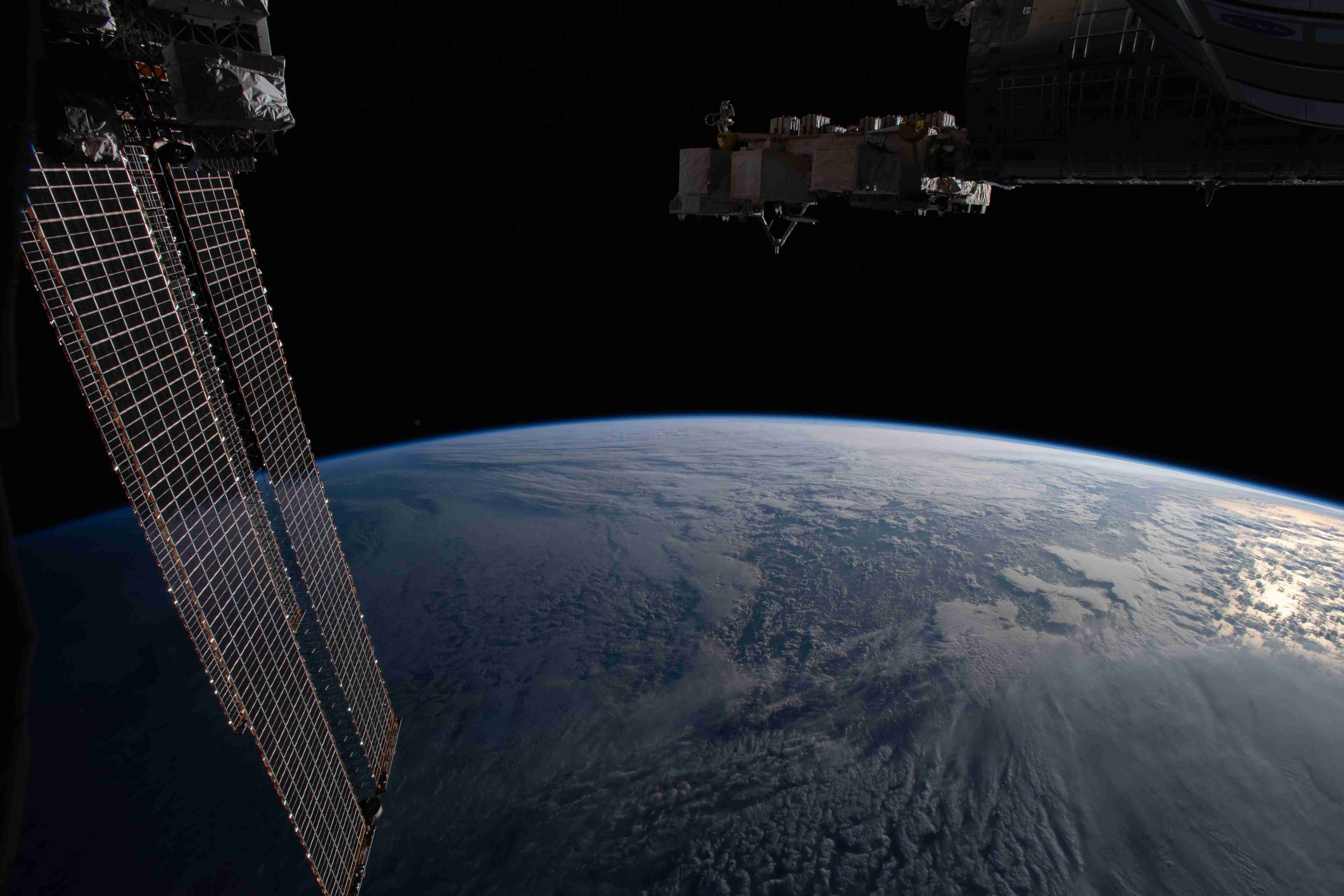
I've spent my career on a problem that turns out to be surprisingly universal: extracting reliable signal from noisy, incomplete data. It started with dark matter, searching for the faint spectral signature of annihilation events buried in gamma-ray background using the Fermi Large Area Telescope. In physics, if the analysis is straightforward it has already been done; what's left requires working from first principles and building tools that don't yet exist. That disposition turned out to be exactly what you need when the signal is rare non-compliance in a population of millions, or a mechanical fault developing in real time across a vehicle's sensor network, or a planetary curvature encoded in a single photograph taken from a window seat.
Outside academia I found that the same problems, now with real consequences riding on them — vehicles that fail, farms that evade oversight, taxpayers who don't pay — demanded robust solutions, and robust solutions demand that you work from the ground up. My instinct to do that shaped what I'm most proud of at the IRS: a sequential policy simulator I built to backtest how selection strategies behave across years of concept drift. A/B testing tells you which model ranks risk better today; it can't tell you how a feedback loop degrades as tax behavior and policy shift underneath it. When I went looking for where the real performance gap lived, it wasn't in the model architecture. It was in how frequently the model got updated.
Outside of work I build open-source, educational science tools. My current project is planet-ruler, a Python library that lets anyone — from a student on an airplane to a hobbyist with a weather balloon — measure the radius of a planet from a single horizon photograph. The goal isn't the answer. It's that after using it, you understand exactly why your measurement is what it is, where the uncertainty comes from, and what you'd do differently with a better camera or a clearer day.
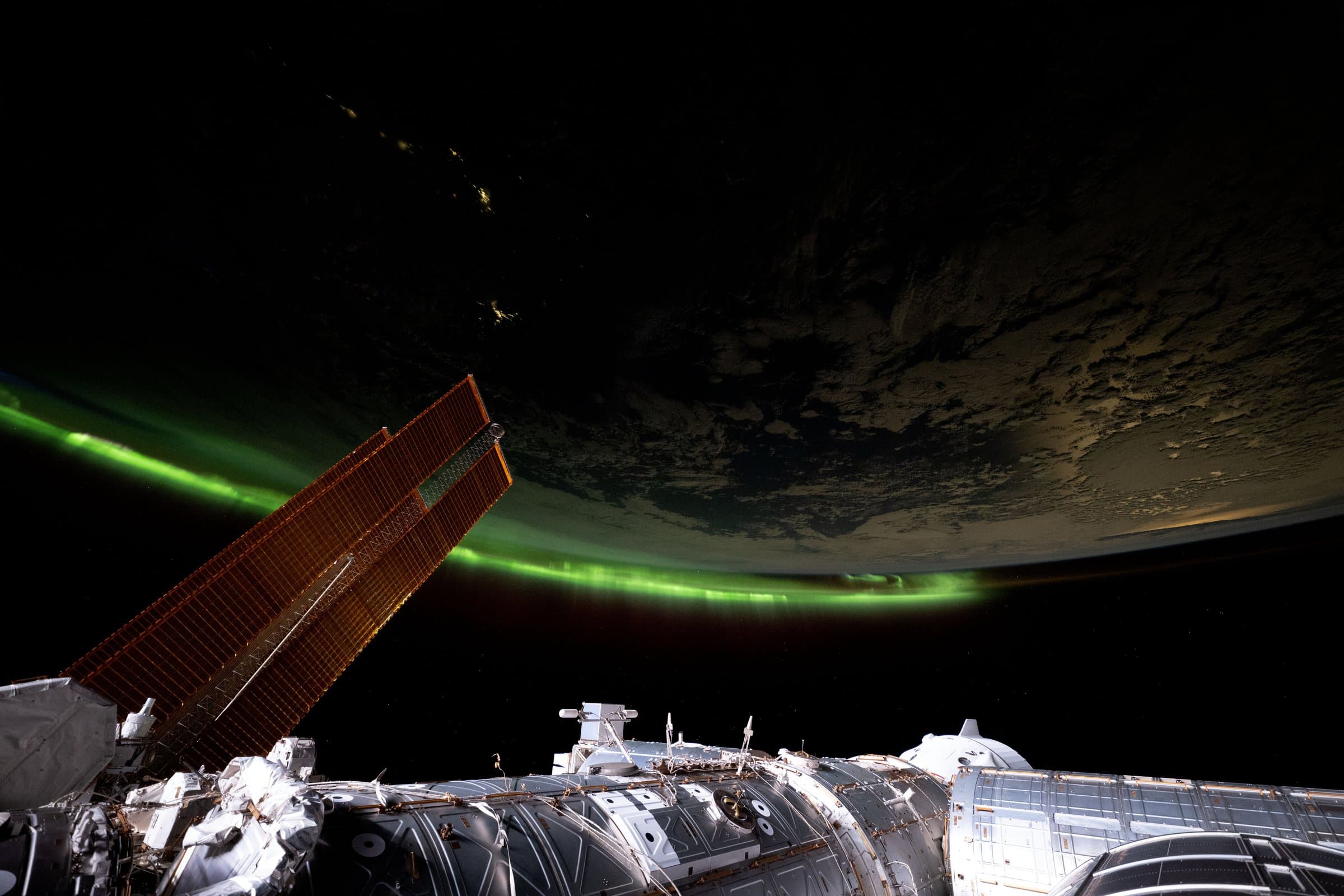
ISS · ~250 miles above Earth
Experience
Internal Revenue Service
2023 – PresentTechnical Advisor · Research Division · Washington, D.C.
- ·Designed a historical operational simulator to derive optimal audit selection policy.
- ·Identified that model update cadence — not model architecture — was the primary performance lever in audit selection; cadence optimization alone predicted >25% lift in ROI (IRS-TPC 2026).
Internal Revenue Service
2022 – 2023Data Scientist · Research Division · Washington, D.C.
- ·Revamped a COBOL-era regression alert system — 67% higher value target, 45% fewer false positives.
- ·Co-led the agency's first viable graph neural network risk model for networked entities.
- ·Built and maintained departmental tools for data ELT, software management, and operations simulation.
Stanford Law School · RegLab
2019 – 2022Head of Data Science · Stanford, CA
- ·Built a computer vision + active learning pipeline to map 300K+ industrial farms nationally from satellite imagery — 60%+ cost efficiency gain.
- ·Developed a foundational language model for legal tasks and led technical design for $8M+ in successful grants.
- ·Led hiring, grant writing, and partnership management; introduced industry engineering practices (Git, CI/CD, agile) to a previously ad-hoc academic lab.
Cognomotiv
2018 – 2019Data Scientist · Early Stage Startup · Menlo Park, CA
- ·Built real-time semi-supervised federated fault detection models on live vehicle telemetry; a non-obvious data manipulation converted the recurrent architecture from an association engine into a causal one.
Bioelectron
2017 – 2018Data Scientist · Series G Startup · Mountain View, CA
- ·Developed detector simulations and ML algorithms to surface events in time-series metabolic data.
Stockholm University
2013 – 2016Postdoctoral Researcher, Astrophysics · Stockholm, Sweden
- ·Searched for dark matter annihilation signals from Milky Way dwarf galaxies using six years of Fermi Large Area Telescope data.
- ·Developed likelihood-based statistical frameworks for combining multi-instrument datasets.
Projects
planet_ruler
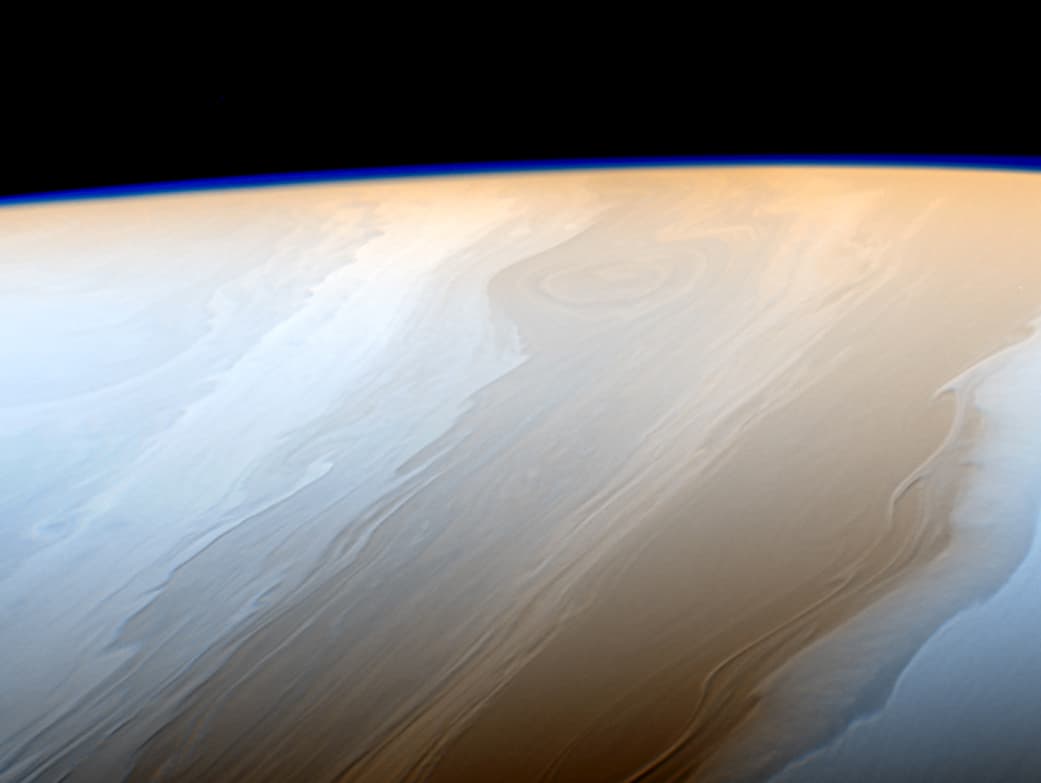
2025Python library on PyPI for measuring planetary curvature from a single horizon photograph — designed for students, educators, and citizen scientists. Three complementary methods (manual annotation, gradient-field optimization, ML segmentation) let users compare approaches and understand trade-offs, not just get a number. A native iOS/Android companion app (React Native/Expo) is currently in release, adding GPS altitude integration and touchscreen annotation for field use.
Lab / Experiments
anomalous-trichromacy-simulator
2026Browser-based tool for experiencing the perceptual ambiguity of anomalous trichromacy (~3% of the population). Instead of a static color transform, it cycles between competing cone-signal interpretations above the flicker-fusion threshold — the same ambiguity an anomalous observer's brain has to reconcile. Built from first-person observation (deuteranomaly) and cone-overlap biophysics, with confusion-zone masking, luminance normalization, and Bayer spatial dithering to keep the effect localized and artifact-free. No build step, no dependencies.
jit_instruction_retrieval
2025Proof-of-concept: retrieving only the k most relevant instructions per prompt via FAISS vector index outperforms loading the full instruction library into every context. JIT k=5 hits 86.6% pass@1 on HumanEval vs. 77.4% baseline — a 9.2 pp gain — while using ~80% fewer tokens than the static (all-instructions) condition.
Publications
Full list → Google Scholar- 1.
Z. Wei, S. Alam, M. Verma, M. Hilderbran, Y. Wu, B. Anderson, D. E. Ho, J. Suckale, “Integrating water quality data with a Bayesian network model to improve spatial and temporal phosphorus attribution: Application to the Maumee River Basin”
Journal of Environmental Management, 2024
- 2.
C. Robinson, B. Chugg, B. Anderson, J. M. L. Ferres, D. E. Ho, “Mapping industrial poultry operations at scale with deep learning and aerial imagery”
IEEE Journal of Selected Topics in Applied Earth Observations and Remote Sensing, 2022
- 3.
B. Chugg, B. Anderson, S. Eicher, S. Lee, D. E. Ho, “Enhancing environmental enforcement with near real-time monitoring: Likelihood-based detection of structural expansion of intensive livestock farms”
International Journal of Applied Earth Observation and Geoinformation, 2021
- 4.
M. Ackermann, A. Albert, B. Anderson, et al., “Searching for dark matter annihilation from Milky Way dwarf spheroidal galaxies with six years of Fermi Large Area Telescope data”
Physical Review Letters, 2015
- 5.
B. Anderson, J. Chiang, J. Cohen-Tanugi, J. Conrad, A. Drlica-Wagner, M. L. Garde, S. Zimmer, “Using likelihood for combined data set analysis”
arXiv preprint arXiv:1502.03081, 2015